
The relationship between terror operatives and politicians is a murky one. Rediff.com's Vicky Nanjappa explores

Tapan Kumar Deka, the "crisis man" who was put in charge of the counter-assaults during the 26/11 Mumbai attack, was on Friday appointed director of the Intelligence Bureau (IB) while the tenure of Samant Goel, who has been heading the Research and Analysis Wing (R&AW), has been extended by one more year.

The Jammu and Kashmir police arrested two people who were involved in the killing of Mirwaiz Mohammad Farooq, 33 years after the then chief priest of the Valley fell to the bullets of Hizbul Mujahideen assassins, a senior police officer said in Srinagar on Tuesday.
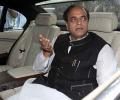
IM operative Sultan Ahmed Faizan worked with the Samajwadi Party leader in 1985 in a travel agency. Vicky Nanjappa reports

Seven Indians are currently with the Islamic State in Iraq and Syria, just one in a combat role, while six from the country who had joined the dreaded terror network have gone down fighting.
Intelligence Bureau officials fear the low-impact explosion bears all the markings of a typical Indian Mujahideen terror attack and that the terror module is testing the waters before they strike fear into the hearts of the people. Rediff.com's Vicky Nanjappa reports how the blast could be an ominous sign of things to come and how the dreaded operative Abdus Subhan is taunting officials.
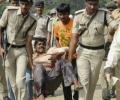
The Patna attack was just the beginning, the alleged SIMI terrorist told NIA agents. His organisation has resolved to attack Narendra Modi wherever possible.
The National Investigation Agency has announced a reward of Rs four lakh on information leading to the arrest of absconding Indian Mujahideen terrorist Abdul Subhan Qureshi alias Touqeer.
The arrest of Indian Mujahideen chief Yasin Bhatkal may have been a shot in the arm for investigating agencies, but they are finding that he is a tough nut to crack, says Vicky Nanjappa.
After the setback of their arrest of their chief Yasin Bhatkal, top Indian Mujahideen operatives are now looking for his replacement.

Thirteen years after 56 people were killed in a series of bomb blasts in Gujarat's Ahmedabad, a special court in the city has concluded the trial against 77 accused, while reserving its verdict in the matter.
Intelligence Bureau officials say the Mumbai terror attacks were the handiwork of the Pakistan-based Lashkar-e-Tayiba in association with some 'home-grown terrorist groups' from India.
Kagzi, who is wanted by the Indian agencies in connection with the Aurangabad arms haul case of 2006, is reportedly an important player in the overseas operations of the Indian Mujahideen.
Suspected Indian Mujahideen operative Fasih Mahmood, who was deported from Saudi Arabia last year, was on Saturday chargesheeted for terror acts in connection with the 2010 Jama Masjid attack.

The Gujarat Anti-Terrorist Squad has arrested an alleged Students Islamic Movement of India operative, who was wanted in the 2008 serial bomb blasts in the city, from Belgam in Karnataka.

Terror outfit Indian Mujahideen and terrorist Abu Jundal may have played major roles in orchestrating the Bodh Gaya blasts, initial investigations have revealed. IM terrorists had planned the terror strike way back in 2010 to achieve two main objectives. They wanted to carry out a retaliatory strike against the arrest of their operatives across India and they wanted to send a strong message to boost the morale of their local supporters.

In the backdrop of alleged involvement of a 'Ranchi module' of Indian Mujahideen in the October 27 serial blasts near a Bharatiya Janata Party rally in Patna, police on Monday recovered nine live bombs matching those found in Patna from a lodge at Hindpiri in Ranchi.

The National Investigation Agency, while probing the serial blasts in Gaya, is taking a closer look at the Darbhanga module of the Indian Mujahideen. The Darbhanga module is considered to be one of the most notorious branches of the IM.

Saeed also said that the attack was a fitting reply to Prime Minister Narendra Modi.

Threatening messages, purportedly forwarded by terrorists group Indian Mujahideen, were sent to the official email IDs of 16 ministers in the Rajasthan government prompting the police to further strengthen the security arrangements in the state.
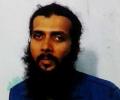
Indian Mujahideen co-founder Yasin Bhatkal and his aide Asadullah Akhtar were chargesheeted by the Delhi police in a court on Thursday in connection with the September 2010 Jama Masjid terror attack case where a bomb fitted in a car had exploded.

'The operation was planned in a manner so as not to alert the terrorists.' 'Every precaution was taken to keep it low-key so as not to alert the terrorists and surprise them and arrest them.'

"Discrimination" against Muslims is giving rise to a feeling of injustice among them, Press Council Chairman Markanedya Katju on Sunday claimed and rebuked the media for what he described as "demonising" Muslim community through "irresponsible" journalism.
In a breather for the Maharashtra ATS, arrested Yasin Bhatkal has confirmed to his interrogators that Gujaratis travelling in first class compartments of Mumbai locals were the target of 2006 train bombings as the IM wanted to avenge the 2002 Gujarat riots. Vicky Nanjappa reports.

The investigations into the April, 2010 Chinnaswamy stadium blasts in Bengaluru have revealed that the reason behind the attack was to 'avenge' leaving Pakistani cricketers out of the Indian Premier League.
According to sources in the National Investigation Agency, four persons planned and executed the twin blasts in Hyderabad on February 21, which claimed 16 lives. Vicky Nanjappa reports.
Indian Mujahideen co-founder Yasin Bhatkal wanted to fight North Atlantic Treaty Organisation forces in Afghanistan as an 18-year-old when the US launched its campaign against Taliban following the 9/11 attacks, investigators have said.
As investigators struggled for a breakthrough eight days after the twin blasts, two suspected Indian Mujahideen operatives, who had allegedly recced the area of the attack, were brought here from Delhi's Tihar jail on Friday and grilled by the National Investigation Agency sleuths.
The national Investigation Agency has moved a Delhi court seeking custody of two alleged operatives of banned terror outfit Indian Mujahideen to interrogate them in connection with the twin blasts in Hyderabad which claimed 16 lives.
Since 2002 however, a section of media, political parties and NGOs have kept up a barrage of propaganda to keep memories of these riots alive and created a sense of 'victimhood' amongst the minorities. The constant dinning of this propaganda has deepened the cleavages between majority and minority and also prompted a fear psychosis amongst the minority, says Colonel (retd) Anil Athale
A five-member team of the National Investigation Agency on Thursday raided several places in the Bihar's Darbhanga district in search of Indian Mujahideen founder Yasin Bhatkal, one of India's most wanted criminals wanted in connection with scores of terrorism cases, police officials said.
Suspected Indian Mujahideen terrorist Fasih Mohammed, who was deported from Saudi Arabia last year and is accused in terror strikes in India, Tuesday sought bail from a Delhi court.
Author and journalist Shishir Gupta addresses questions about the terror threat facing India, the Jihadi network and the Indian Mujahideen

Four suspects have been arrested in connection to the serial blasts that rocked Patna on Sunday. They have been identified as Imtiaz Ansari, Kaleem, Mohammad Ainul and Akthar, according to sources.

Nadda said the investigating agencies had nabbed one accused from Azamgarh and another from Jaunpur.
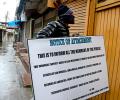
National Investigation Agency officials seized Mushtaq Ahmad Zargar's home in Srinagar on Thursday, March 2, 2023. On December 31, 1999, Zargar was released along with Jaish e Mohammed founder Masood Azhar and the British terrorist Omar Saeed Shaikh in exchange for the passengers and crew on board IC-814, the Indian Airlines flight hijacked from Kathmandu and flown to Kandahar in Afghanistan.
Sahim Salim talks to officers of the special cell in New Delhi, and finds out what goes on behind the scenes during an investigation
With extortion, robberies, fake currency and arms smuggling, the homegrown terror outfits may have raised Rs 200 crore.

Yasin Bhatkal, the chief of terror outfit Indian Mujahideen who was recently arrested by Indian security agencies, came across as extremely bitter and disillusioned about his mentor -- the Inter Services Intelligence -- during his interrogation.
An engineer by profession, Fasih Mehmood is under probe by investigation agencies for his suspected role in the Chinnaswamy stadium blasts at Bengaluru in April 2010.
 © 2026 Rediff.com - Advertise with us - Disclaimer - Privacy Policy - Sitemap - Feedback - About us - Terms of use - Grievances